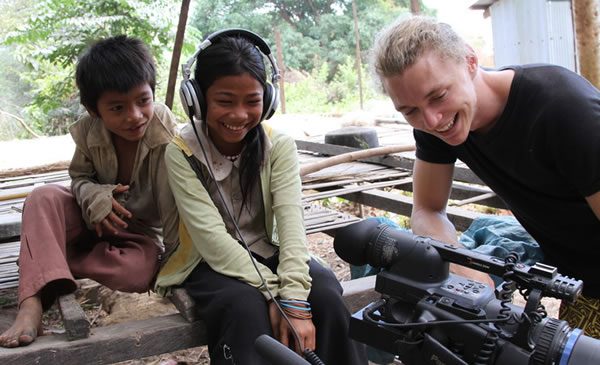
It’s time to begin filming. It’s a long drive from Phnom Penh, especially with a flat tyre. But we got there and stuck in to a few days filming with local women, men and children from the village.
Arrival
Turning off the main road, we slowly wound our way along dirt tracks through the forest to reach Pon Chea village. We got a few waves, some smiles and plenty of intrigue, as our packed car entered the village. Kids were playing in yards, animals roaming around and adults busy with chores. It was an exciting prospect that we’d be spending the next few days here.
Introductions
First up, we met with the village chief to have a chat about our plans. After a few tips and the thumbs up, we went to introduce ourselves to various people we’d be filming and to get some general village footage. In a matter of minutes, our first challenge arrives; the mother of our family-in-focus is very skeptical about the film.
“Why do you need to film? Is it legal? What are you going to use the film for?”
My heart sunk. If our family-in-focus is worried about the film, then who knew what was going to happen with everyone else? I turned to my workmates, “did somebody speak with her before we came?” My weeks of planning and scripting seemed to be going up in smoke. But my workmates explained they’d spoken to her before and got approval — excellent. Not just that, they had also obtained a written letter from the provincial government fully endorsing the film. Showing our to-be film star the letter was gold, while a local council member we’d brought along provided further assurance. Our star was now enthusiastic to be part of the production.
After a big thank you, we went down to the banks of the Mekong. Armed with buckets and containers, kids were collecting heavy loads of (often unsafe) water from the river to take home; a chore that nearly always falls to women and children. Build a water pump or tank and all of a sudden women and children are freed from hours of painful labour everyday. This provided excellent footage of the challenges people face, while the kids were enthralled with the cameras. Day one and things are looking promising.