NAIDOC Week celebrations are held across Australia each July to celebrate the history, culture and achievements of Aboriginal and Torres Strait Islander peoples. NAIDOC is celebrated not only in Indigenous communities, but by Australians from all walks of life. The week is a great opportunity to participate in a range of activities and to support your local Aboriginal and Torres Strait Islander community.
NAIDOC originally stood for ‘National Aborigines and Islanders Day Observance Committee’. This committee was once responsible for organising national activities during NAIDOC Week and its acronym has since become the name of the week itself.
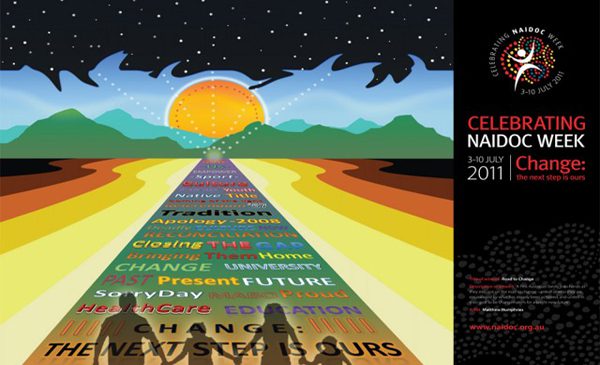
For 2011, NAIDOC Week is celebrating the concept of ‘Change: the next step is ours’, and this years’ poster design by Matthew Humphries certainly reflects this. A First Australian family link hands as they step out on the road to change – proud of who they are, encouraged by what has already been achieved and united in their goal to be changemakers for a bright new future.
Here are some ideas on how to celebrate NAIDOC:
- Hold a flag raising ceremony
- Display Indigenous posters around your class room.
- Invite local Indigenous elders to speak at your school or workplace.
- Listen to Indigenous music.
- Study a famous Indigenous Australian.
- Research the traditional Indigenous owners of your area.
- Study Aboriginal arts and crafts.
- Read a Dreamtime story.
- Start your own Indigenous hall of fame featuring any local role models and achievers.
- Create your own Aboriginal art.
- Visit Indigenous websites on the Internet.
- Make your own Indigenous trivia quiz.
- Visit local Indigenous sites of significance or interest.
- Learn the meanings of local or national Aboriginal place names.
Local community celebrations during NAIDOC Week are encouraged and often organised by communities, government agencies, local councils, schools and workplaces.
What you can do:
- Find a NAIDOC Week event in your city
- Tune into ABC Radio for their NAIDOC specials
- Find out more about Oxfam’s work in the health and wellbeing of Aboriginal and Torres Strait Islander peoples
- Get involved in the national conversation about recognising Aboriginal and Torres Strait Islander People in the Australian Constitution
- Read more about NAIDOC Week