“There cannot be effective development without economic justice”
Otaviano Canuto, Vice President for Poverty Reduction and Economic Management Network (PREM), World Bank
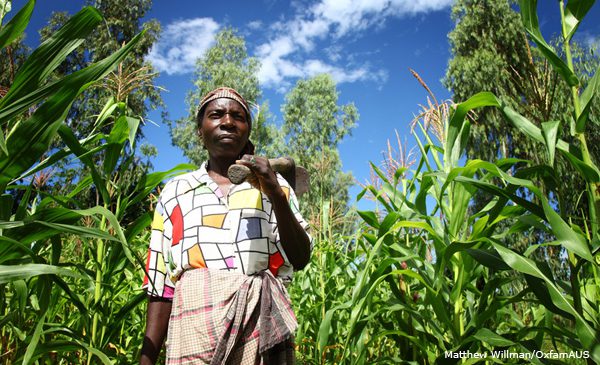
While world poverty has decreased over recent years, we still live in a world where economic justice has not been achieved. Almost two thirds of the world’s people live without the security of knowing that they can earn enough to sustain themselves and their families. This means they are unable to do the things we take for granted – like sending their kids to school, being able to go to a doctor, having a job, or even having access to land to grow food. The poorest of the poor (just under 1 billion) don’t even know where their next meal is coming from.
For poor women, achieving economic justice can be a particular challenge. Women engage in much of the world’s unpaid labour, both at home, on the farm and in the community at large. Even when included in the paid workforce, women face obstacles in obtaining fair pay and safe working conditions. The world will continue to face many new challenges that threaten to undermine any progress towards economic justice. These include the global financial crisis, governance and economic policies, natural disasters and climate change, amongst others. Despite the fact that people living in poverty bear the least responsibility for creating these problems, these issues have a disproportionate impact on them. When you’re desperately poor, any impact at all can be a matter of life or death.
Oxfam is proud to partner with One Just World to present the Who Should Get What and Why? Financing Economic Justice for the World’s Poor forum.
How do we go about financing economic justice? Who takes the lead? Does the responsibility for economic justice lie with developing countries themselves? Do multi-lateral institutions or non-government organisations have a role to play? Or, as argued by proponents of a ‘Robin Hood’ tax, should the global banking sector finance economic justice?
Tuesday, 22 February 2011
BMW Edge, Federation Square, Melbourne
Speakers include:
- Andrew Hewett – Executive Director, Oxfam Australia
- The Hon Emilia Pires – Minister for Planning and Finance, East Timor
- Mary Ellen Iskenderian – President and CEO Women’s World Banking
- Ross Buckley – Professor of International Finance Law, University of NSW
- and moderated by Liz Jackson – Reporter, Four Corners, ABCTV
Read more about the Robin Hood Tax