I was recently on a trip with Barbara Stocking, the CEO of Oxfam Great Britain, who visited to see what was happening with Oxfam’s work in Cambodia. Travelling into the Northern provinces, we witnessed some highs and lows of development.
Barbara was doing a regional visit as part of the launch of Oxfam’s new food justice campaign, Grow. The campaign focuses on the challenges in feeding the world and ensuring equitable distribution and production of food. We headed up to the northern province of Kampong Thom to visit some of Oxfam’s projects dealing with these issues.
First up, we visited a palm sugar producers group that Oxfam has been supporting in production and marketing techniques. Palm sugar collection and processing occurs during the dry season. This makes it a great income earner for the millions of Cambodian farmers without irrigation or dry season water sources – rice is generally only grown during the wet season. As the group’s skills improve, they are producing more and better quality sugar that is able to attract better profits and reach larger markets. Women especially benefit with greater financial independence and a supportive group that can also be a forum for gender issues.
Driving deep into the forest and fields, we came to another project, where Oxfam supports a tree resin group. The group involved many people in the community collecting and selling resin from the nearby forest. It was a simple, effective project that supported men and women to make an income from sustainable use of the forest. Recently, disaster struck for the group – of the 10,000 hectares of forest they used, 9,000 hectares was sold off, as an economic land concession. Villagers were not allowed to enter the area and lost their income source with minimal consultation and no compensation. They are now working to get a community forestry order, so they can secure to access the remaining 1000 hectares. Their prospects are not good.
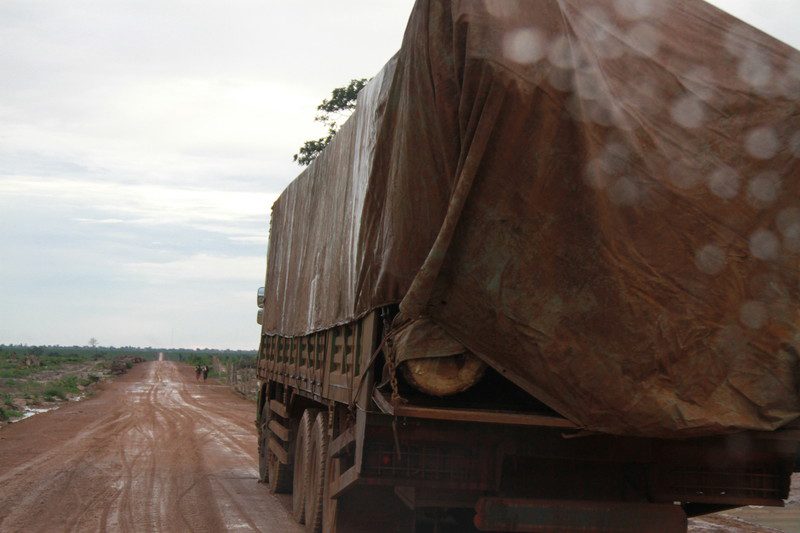
We left the village, guided by the villagers’ directions. Our hearts sank, as this lead us through the land concession, which was now logged and desolate – rubber tree seedlings the only sign of life. In these cases, local people are normally excluded from the small amount of laboring work available in the plantations. Women are especially excluded from the labour-intensive work. It was devastating to see.
Small scale farmers are integral to feeding the world; they must be supported in efforts to improve their production and secure their access to land.