I saw the signs before I saw the damage. As we drove northward on the Filipino island of Cebu to the hard-hit city of Daanbantayan a week after the typhoon, young children lined the streets, holding up pieces of cardboard that said “Please help, we need food and water.”
These children should be at school, but the typhoon has turned their daily routines upside down. Their homes are flattened, or the roofs have blown away – as one person described it, their houses now have a “sky ceiling.”
The immediate aftermath
Two weeks after the typhoon devastated the Philippines, schools with damaged classrooms are closed, and with many businesses and industries destroyed, parents are not able to work to earn a living. They tell me they have other immediate priorities anyway – securing shelter, and ensuring there is enough food and water for their families.
A few days later, when I visited Tacloban in the eastern Visayas, I saw scenes of desperation. Crowds gathered at the airport trying to find a seat on a plane out, carrying as much as they could in suitcases, bags and cardboard boxes.
In the centre of Tacloban, I saw body bags on the street, along with litter and debris. Many people talked to us about the urgent needs they faced — basics like food, water and shelter. In many places, we heard that people are not expecting electricity to be restored for months.
Signs of recovery
At the same time, I saw early indications of improvement. In Tacloban, I saw people roasting pigs for sale. In the markets at Daanbantayan and on Bantayan Island, stocks are relatively normal, and trade is continuing much as it was before the typhoon, with some increased demand for building materials as people start to repair their homes.
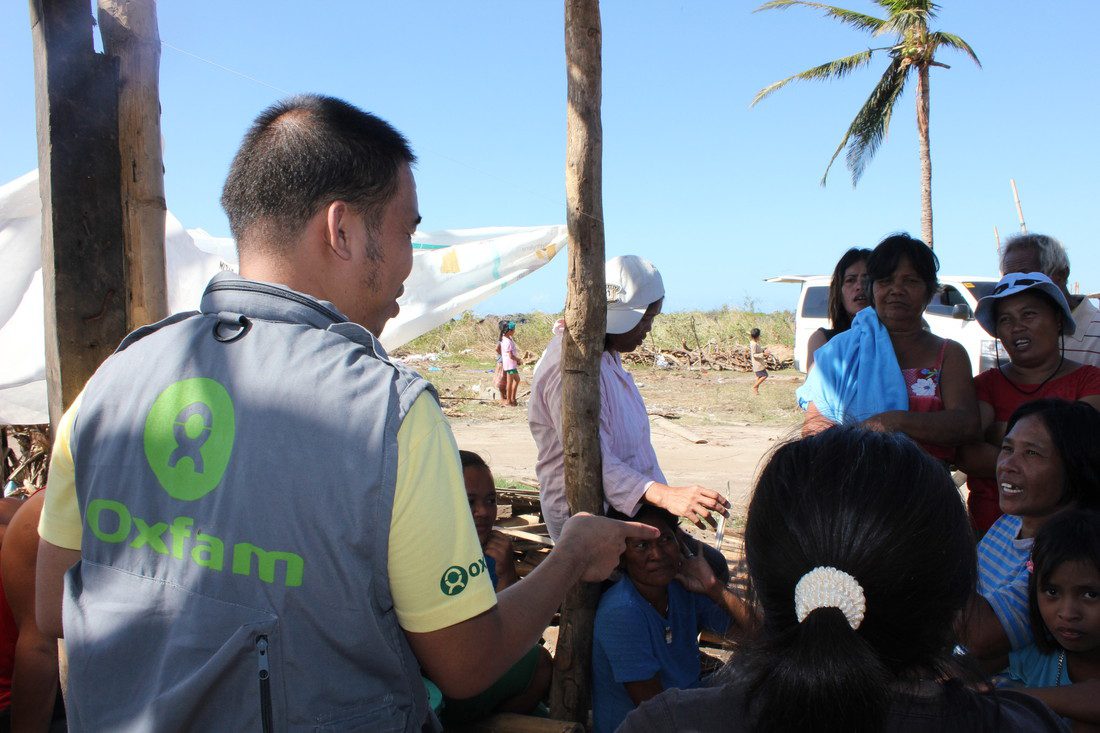
I am astounded by the strength of the typhoon survivors. Despite all they had been through, the people I met remained warm and friendly. At a distribution of hygiene kits in Daanbantayan, the community applauded as the Oxfam team demonstrated the items in the kits for the crowd – with some of the loudest claps and cheers for the underwear and sanitary napkins.
Of course, as many of us know, humour can be a way to cope during life’s darkest moments. Many people here are traumatised by what has happened to their families and their homes, and will need counseling and other psychological support to help them fully recover.
Oxfam teams on the ground
Meanwhile, Oxfam teams are mobilising urgent relief – for example, helping to restore water pipes in Tacloban, distributing water treatment solutions to communities in Daanbantayan, and organising temporary shelter such as tarpaulins for the people of Bantayan Island.
On the return drive to Cebu city this week, at the close of my deployment, I saw another cardboard sign, this one not a plea for aid. Instead, a handwritten message was posted outside a small shack along the highway, reading “Thank you for your help.”
And when I arrived in Bantayan Island, I saw, from the ferry, a giant banner erected on the beach. It said, simply, “We will rise again.”
By: Chee Chee Leung, International Programs and Emergencies Media Coordinator, Oxfam Australia

Donate today to help us reach 500,000 people in desperate need of emergency aid after the devastation of Typhoon Haiyan.