Two years of war have plunged Yemen into one of the world’s worst humanitarian crises and put the country at risk of famine. Now it is at the mercy of a deadly and rapidly spreading cholera epidemic that is killing one person nearly every hour. If not contained it will threaten the lives of thousands of people in the coming months.
The world’s worst cholera outbreak
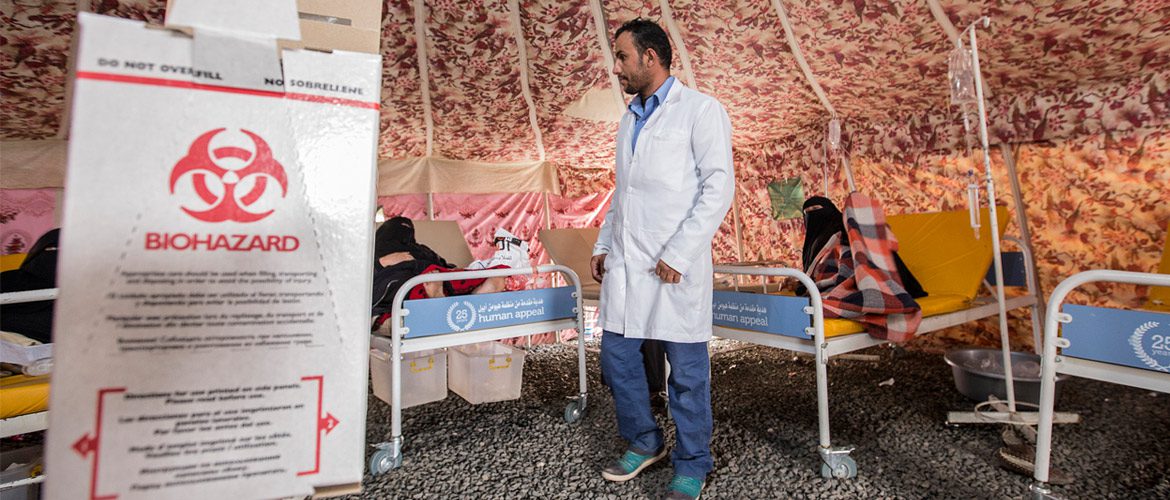
In just two months Yemen’s cholera epidemic has spread to nearly every corner of the war-ravaged country. It is estimated that more than 200,000 people in Yemen are suffering from cholera. More than 1,300 people have died – a quarter of them children. The UN predicts that the number of people affected will reach 300,000 by August.
Efforts to beat cholera are massively undermined by the war, which has decimated the health, water and sanitation systems. Waste is piling up on the streets and in the settlements of displaced people. Medical materials are in chronically short supply and only 45 per cent of health facilities are functioning. An estimated 18.8 million people now require humanitarian assistance including food, safe drinking water and sanitation.
What is cholera?
Cholera is a disease caused by a bacterial infection of the intestine, characterized by acute, watery diarrhea (AWD) and vomiting. If sick people are not promptly and adequately treated, the loss of large amounts of fluid and salts can lead to severe dehydration and death within hours. Because the incubation period is very short (two hours to five days), the number of cases can rise very rapidly.
Cholera is extremely contagious. It is usually transmitted through fecally contaminated water, hands or food. The greatest risk occurs in over-populated communities, displaced populations and refugee settings, where poor sanitation, unsafe drinking water and food, and increased person-to-person contact allow the disease to spread more easily.
Oxfam’s cholera response: five key actions to stop the spread
Since the beginning of the outbreak, Oxfam has worked to contain the disease by focusing its response on improving access to safe and clean water and promoting good hygiene practices:
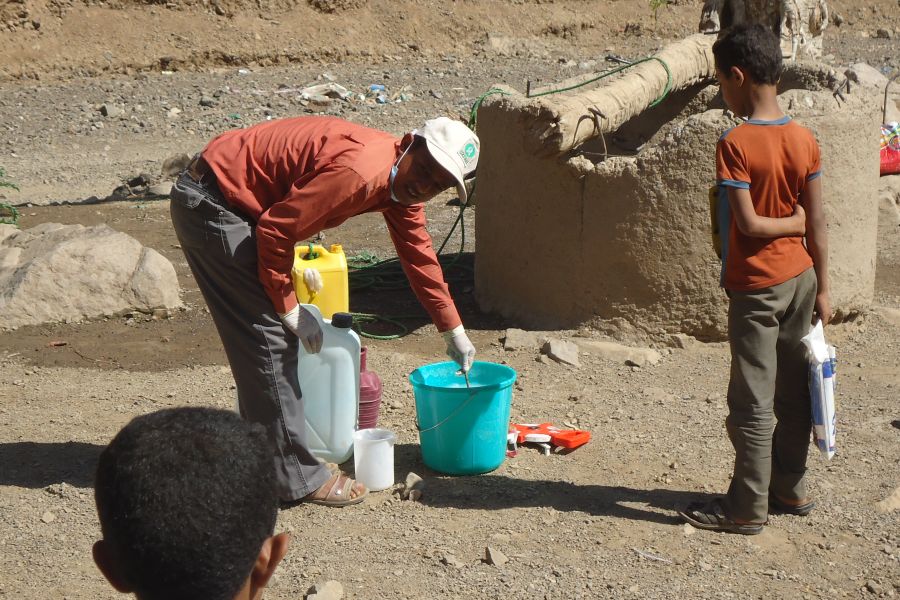
- We repair water supplies and carry out disinfection of water storage and sources using chlorine that helps kill or reduce the bacteria
- We provide households with water purification equipment and distribute hygiene materials such as soap for hand washing, buckets and safe water containers
- We construct latrines and provide solid waste management facilities for the safe disposal of excreta to prevent it coming into contact with other people
- We train community volunteers to spread hygiene messages for cholera prevention and treatment, including hand washing and cleaning of water storage facilities
- We conduct public health campaigns to raise awareness about the measures individuals can take at the household level to prevent and treat cholera
Act now
We have already provided water and sanitation assistance to more than 418,000 people in Taiz, Aden, Hajja and Amran governorates. Cholera is simple to treat and prevent, but while the fighting continues the task is made doubly difficult.
The outbreak is set to be one of the worst this century unless there is a massive and immediate aid effort to bring it under control. You can help.
Global hunger, famine and food security
An extreme lack of food is causing hunger and malnutrition across Yemen, South Sudan, Nigeria, Somalia and Somaliland. We must end this crisis now before more innocent women, men and children starve.