The Government’s proposed carbon price legislation, announced yesterday, is a good start to help Australia to catch up to international action on climate change. Australia is currently falling behind international action and is not contributing its fair share to global efforts to address climate change
Oxfam research released last month revealed that developing countries are making more of an effort to cut their greenhouse gas emissions than developed countries. More than 60 per cent of emissions cuts by 2020 are likely to be made by developing countries, even though they have the least resources.
In the lead-up to the important UN climate negotiations in Durban later this year, the world is watching to see if Australia will act. Passing this carbon price legislation will be an important step. Climate change is already affecting the world’s most vulnerable people, who are facing greater droughts, floods, hunger and disease.
Our research recently found that Australians were the most concerned people out of all countries surveyed about the impact of weather patterns on food. 38 per cent of Australians surveyed believe that floods, droughts and cyclones are impacting the supply of food. Climate change was the major development issue of our time and posed a major threat to food production throughout the world.
Average prices of staple foods, such as maize, are set to increase by between 120 and 180 per cent by 2030. Up to half of this increase would be driven by climate change. In addition to reducing its own greenhouse gas emissions, Australia also needs to provide additional money to fill the Green Climate Fund, to support developing countries adapt to the impacts of climate change.
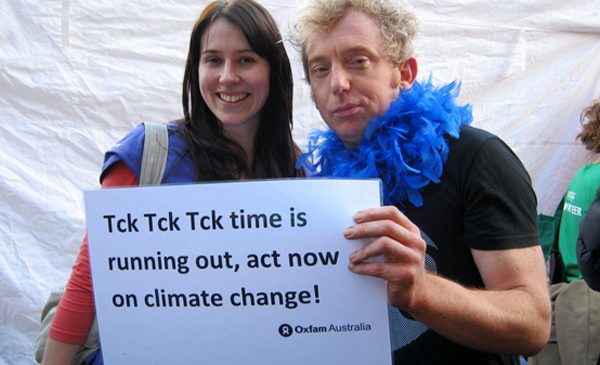
Time is quickly running out to prevent the most catastrophic impacts of climate change. Without urgent action to curb global emissions, most of the gains made by the world’s poorest to reduce poverty will be lost.