The wealth of the three richest Australians, Gina Rinehart, Andrew Forrest and Harry Triguboff, has more than doubled since 2020 at a staggering rate of $1.5 million per hour. Meanwhile 5 billion people are poorer thanks to the pandemic, war and climate change impacts.
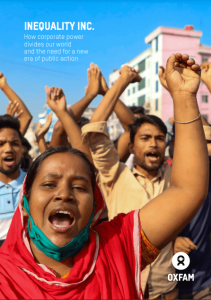
These are some of the stark findings of Inequality Inc, an Oxfam flagship report launched ahead the 2024 annual meeting of the World Economic Forum, held in the Swiss mountain resort town of Davos.
The report also finds that in the middle of a cost-of-living crisis spurred by the pandemic, war, famine and the climate crisis, billionaires have made a cool $5 trillion since 2020.
Looking just at the world’s five richest men, they have been able to more than double their fortunes from $610 billion to $1.3 trillion – a rate of $21 million per hour. In the same period 5 billion people were made poorer.

Oxfam’s own research found that 791 million workers have seen their wages fail to keep up with inflation, resulting in a loss of $2.3 trillion over the last two years, equivalent to nearly a month (25 days) of lost wages for each worker.
As the rich and powerful fly into Davos on their private jets, Oxfam is sounding the alarm on inequality and bringing to light the monolithic corporate monopolies that drive it.
Corporate power is driving inequality
We are living in a new era of monopoly corporate power. A small number of corporations continue to get bigger and bigger, wielding extraordinary influence over economies, governments and the lives of workers and people trying to get by in times of crisis. These corporations are often making super profits, which mostly deliver financial benefits to wealthy shareholders, including their billionaire majority shareholders or owners.
Oxfam research has shown that the 148 top corporations made on average $18.24 billion in annual profits, while hundreds of millions of people faced cuts in real wages. This includes here in Australia where, since 2020, real wages have dropped back to levels seen 14 years ago, while people are facing much higher costs for basics like housing and food.
If current trends continue, the world will have its first trillionaire within a decade, while poverty won’t be eradicated for another 229 years.
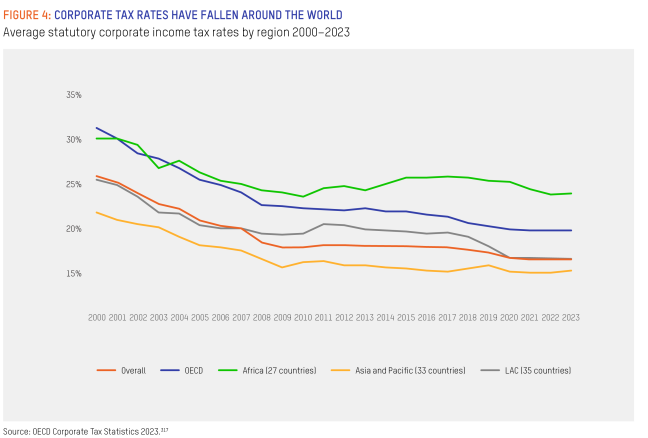
Many of these big corporations are making super profits because they avoid paying their fair share of tax, have little competition, and fail to pay a living wage to workers in developing countries. This has to change.
We can build a more equal and inclusive society by making tax fair
Runaway corporate power and inequality works for very few, but comes at the cost of the vast majority. Oxfam is calling on governments to rein in corporate power and extreme wealth and build economies that work for all of us, not just the richest few at the top.
We need to governments to better tax corporations and billionaires, and invest those revenues into vital public services such as education, healthcare and affordable housing that reduce inequality, as well as prioritising eradicating poverty in our region.