By Robin Narciso, Oxfam Communications and Information Officer, Phnom Penh.
One of the most important merits of the Water, Food and Energy forum we attended in Hanoi was to bring together different, and often opposite positions around hydropower.
Government officials, hydropower developers, financial institutions, academia, civil society, trans-boundary representatives, all came together during this three day event to share their perspectives about water governance in the Mekong and learn more about others’ positions.
With great opportunity, however, comes great risk. Having all these people from different sectors in the same room was a unique opportunity to advance critical and inclusive negotiations—but it should not have been a way to compromise on the well-being of impacted communities.
Community needs too expensive
One issue that was discussed during the forum that was popular with developers and government representatives was how much time and money it takes to implement certain standards.
I don’t question the reality of this point, what I question is its considerateness. Accommodations can be made so communities that are forced to leave their home can still have a dignified life afterwards.
Comparing the communities’ vital needs to how much a company or a government spends to implement these standards, should not be a valid argument to “go easy or cheap.”
If the costs of implementing these standards are too high, it suggests the project is not viable or the developers and the governments are responsible to find different avenues to make these more efficient.
Resettlement looks inevitable
In terms of questionable positions, one in particular surprised me. One presentation defined “voluntary resettlement” as a situation where communities can choose among multiple locations when they are forced to leave their own land. When this concept was presented many were perplexed, and rightfully so. Voluntary resettlement means that people have the choice to stay or go, if they decide so.
Perhaps more sadly, was the fact resettling communities seemed to be an inevitable action. Many discussed how to ensure that communities are properly compensated when relocated, not how to ensure that communities can choose whether to keep living on their native land or not.
If, as the Nobel Laureate Amartya Sen maintains, ‘development is freedom’, how can we assume that people are better off when they are forced to relocate?
Support the voice of the people
These points are to highlight the incredible potential for dialogue that this forum has triggered. There is undoubtedly the need for more mediated dialogue and action between all stakeholders.
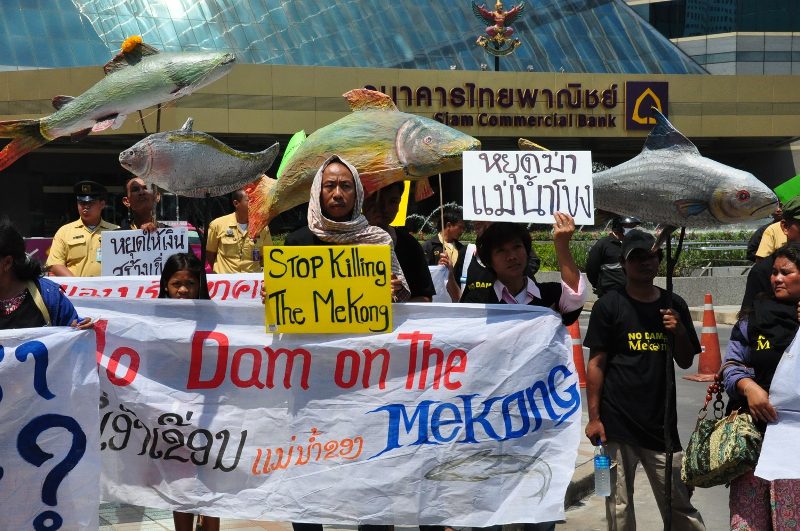
But we need to ensure that we continue to hear the voice of people who are directly affected by hydropower projects. One way to do so is to invite more community representatives to this type of spaces and provide the tools so they can represent their own perspectives and be heard.