Cebu City, on the Eastern Seaboard of the island of Cebu, has become a logistics hub for much of the aid effort going out to Leyte, Samar and Northern Cebu areas. As the aid community mobilises, moving from rapid assessment to scale up, the city has become a focus of logistics, transport, planning and response.
I have just finished my first day in Cebu, spending it with the Oxfam team on the ground. We need fuel, volunteers and transport. You know from news reports that some areas are much harder to access than others. The stricken Tacloban city is now in a state of high security, and getting people and aid supports in and out is challenging.
Our teams have returned from four days of assessment and say that what they have seen is deeply troubling. Two teams are left there as the chopper could not land due to the torrential rains. Their food rations are short but they are fortunate to have the option of leaving soon.
People are lined up in Tacloban we are told, waiting for emergency food distribution, in the torrential rains. There are reports of security problems and looting, but also that people are ‘getting stuff because they need it – they are sharing stuff around.’ As the days grow and basic requirements are held up, inevitably and understandably people’s capacity to cope will erode. Clean water, food and shelter – the absolute basics are critical.
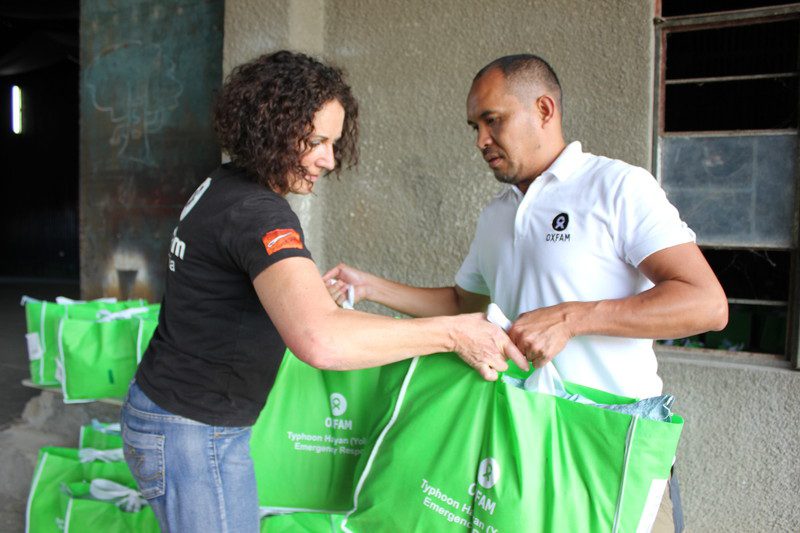
There are always stories that are heartening and give you hope out of this horror. Oxfam is bringing in many items of aid, including hygiene kits, water kits, clean up tools and other things.
Local people active in relief efforts
A local business family, who has their own medical foundation providing support into the Samar provinces and also into Tacloban, has opened their warehouse for Oxfam’s use, in order to store the Oxfam hygiene kits until they can be distributed over the next few days. They are identifying volunteers to go out with the workers to help with the disbursement of emergency hygiene kits.
They are keen to help with logistics where they can. The aid community is in town, but we should not forget the strong civil society groups and the many amazing people directly and indirectly affected themselves who also are rising to the challenge of this disaster.
The world’s media has its eyes on the Philippines, looking for the next story. Could something have been done differently to address the logistical problems? Is there more red tape that could be removed to speed up shipments coming from air and sea? These are legitimate and important questions. The most pressing concern for now is to ensure that aid reaches the hardest hit areas, and people can start to rebuild their lives.
By Helen Szoke – Chief Executive of Oxfam Australia

Donate today to help us reach 500,000 people in desperate need of emergency aid after the devastation of Typhoon Haiyan.